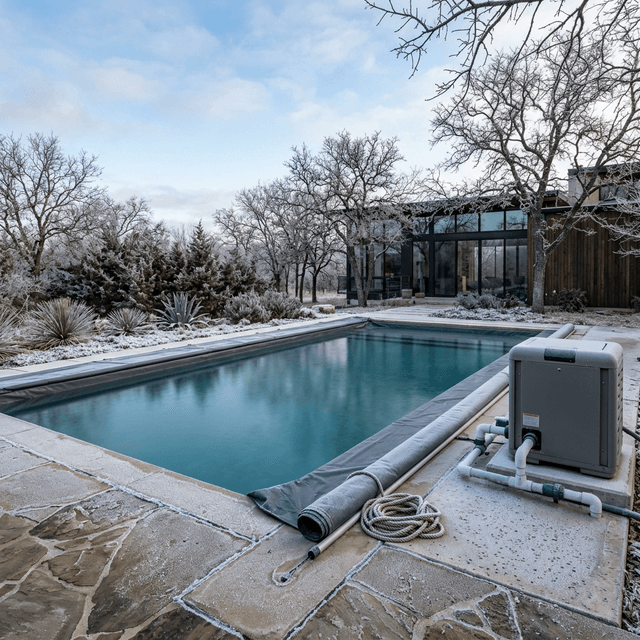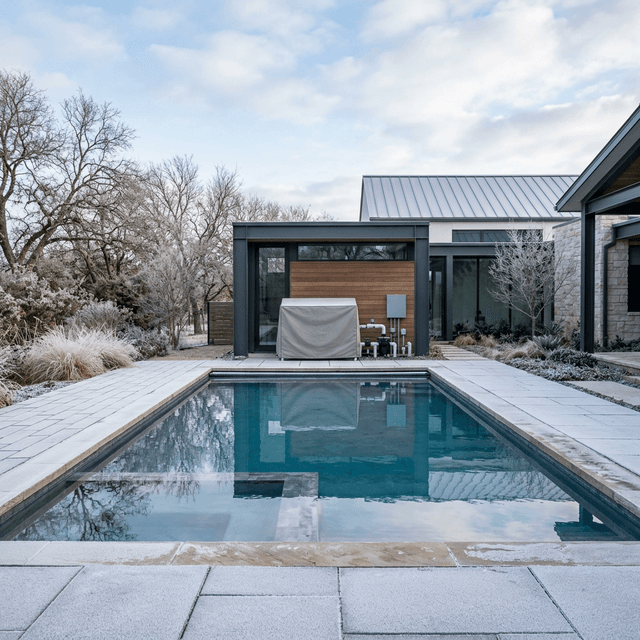
If you have a saltwater pool system, you probably think about winterizing your pump and plumbing. But many DFW homeowners overlook a critical component: the salt cell itself. Cold weather dramatically affects how your chlorine generator performs, and improper winterization can lead to expensive damage.
Understanding how freezing temperatures stress your salt cell and what you can do to protect it is essential for keeping your saltwater system healthy through North Texas winters.
How Cold Weather Affects Chlorine Production
Your salt cell converts dissolved salt into chlorine through an electrolytic process. Temperature directly impacts this chemical reaction.
What happens when temperatures drop:
Below about 50°F, your salt cell produces significantly less chlorine—sometimes 50-75% less than at normal pool temperatures. This is a normal, expected response. The problem occurs when homeowners don't adjust their system settings in response.
At 40°F or below, the cell might produce essentially no chlorine at all. If you don't understand this, you might think your system is broken when it's actually just responding to cold water temperatures.
The Inaccurate Salt Reading Problem
Here's a problem that confuses many pool owners: salt readings become unreliable in cold weather.
Your salt cell's meter reads salt levels based on electrical conductivity of the water. Cold water has different conductivity than warm water, even with the same salt concentration. This means your meter might read incorrectly during winter, suggesting you need more salt when you actually have plenty.
The danger:
If you blindly add salt because the meter reads low during winter, you'll actually over-salt your pool. When spring arrives and water warms up, you'll discover your salt level is dangerously high, requiring expensive dilution.
Increased Cell Wear in Cold Conditions
Beyond reduced production, cold weather accelerates wear on the cell itself.
Why cold stresses the cell:
- The electrolytic reaction becomes less efficient, forcing the cell to work harder
- Mineral scaling occurs differently at lower temperatures
- Ice formation in or around the cell housing can cause physical damage
- Repeated freeze-thaw cycles weaken cell connections
- Frozen water in pipes backing into the cell can crack the cell housing
Your salt cell is designed for warm water operation. Cold weather operation, if not managed carefully, significantly shortens the cell's lifespan.
Steps to Preserve Your Salt Cell Through Winter
Fortunately, protecting your salt cell is straightforward. These steps take minimal effort but pay huge dividends.
1. Lower or Shut Off Cell Output
Your salt cell likely has an output setting (often 0-100%). As water temperature drops, reduce the output setting.
Recommended approach:
- Above 60°F: Run at normal levels (70-100% depending on your pool's chlorine demand)
- 50-60°F: Reduce to 50-70%
- 40-50°F: Reduce to 30-50%
- Below 40°F: Reduce to 10-30% or shut off completely
Many DFW pools don't actually need chlorine production in winter since demand is so low. Running the cell at high output in cold water does more harm than good.
2. Don't Add Salt Blindly
This is critical. Resist the urge to add salt based on winter meter readings.
Better approach:
- Test salt levels only when water temperature is above 60°F
- If you must test in winter, add a +10% adjustment to account for temperature reading error
- Don't add salt unless you're absolutely certain it's needed
- Wait until spring when temperature stabilizes before making major salt adjustments
If your meter reads low in January but was adequate in December, it's almost certainly a temperature reading issue, not a salt deficiency.
3. Maintain Proper Water Chemistry
Cold weather doesn't mean you can ignore chemistry. In fact, balanced chemistry protects your salt cell from corrosion and scaling.
Key parameters to monitor:
- pH (7.2-7.6) prevents corrosion
- Alkalinity (80-120 ppm) stabilizes pH
- Chlorine (1-2 ppm minimum in winter, even from reduced cell output)
- Calcium hardness (200-400 ppm) prevents scaling
Unbalanced chemistry causes mineral deposits and corrosion inside the cell, compounding cold weather stress.
4. Inspect and Clean the Cell Seasonally
Before winter arrives, have your cell cleaned or do it yourself if your system allows.
What to look for:
- Mineral scaling on the cell plates (white or gray crusty buildup)
- Visible debris or damage
- Corrosion on metal components
Many DFW pool companies offer salt cell cleaning services ($75-150). This removes mineral deposits that would intensify cold weather stress and reduces wear. You can also pick up salt cell cleaning solutions at our Northlake pool supply store or shop online to handle routine cleaning yourself. For a deeper dive into cleaning techniques and when to replace your cell, check out our guide on salt cell cleaning and maintenance.
5. Maintain Water Circulation During Hard Freezes
When freezing temperatures hit, keep your circulation system running.
Why circulation matters:
- Moving water is less likely to freeze solid around the cell
- Circulation prevents stagnant cold water from concentrating around the cell
- Water movement keeps salt distributed evenly
- Running the pump maintains system pressure and prevents ice formation in plumbing
During hard freezes (below 28°F), run your pump continuously or on a heavy schedule (at least 6-8 hours daily). This is one of your best defenses against freeze damage to the entire system, including the salt cell.
Special Considerations for DFW Winter Conditions
North Texas freeze events are typically sudden and brief but intense. Our climate creates specific salt cell challenges:
The DFW pattern:
- Sudden temperature swings (60°F one day, 25°F the next)
- Brief hard freezes (12-24 hours of sub-freezing temperatures)
- Rapid warm-ups afterward
This means your salt cell experiences rapid thermal stress. Settings that were appropriate yesterday become inappropriate the next day. Frequent adjustments are necessary.
Practical response:
- Check weather forecasts regularly
- Adjust cell output based on 7-day forecasts
- Before a freeze event, reduce output and run circulation longer
- After the freeze passes, readjust output upward gradually
Signs Your Salt Cell Is Being Damaged by Cold
Watch for these warning signs that cold weather is harming your system:
- Sudden drop in chlorine production (more than 25-30% below normal for the temperature)
- Error codes from your cell monitor or control system
- Visible ice formation on or around the cell or its piping
- Cell meter readings that seem wildly inconsistent
- Burning smells or electrical anomalies from the cell cabinet
- Water backing up near the cell housing
Any of these warrant immediate attention. Contact a professional rather than attempting to operate a potentially damaged system.
When to Have a Professional Inspect the Cell
Call a pool professional if:
- You're uncertain about your cell's condition before winter
- Your cell is more than 5 years old (older cells are more vulnerable to cold)
- You experienced freeze damage to plumbing last year
- Your cell has never been professionally cleaned
- You want a pre-winter diagnostic
A pre-winter inspection ($50-100) is cheap insurance against a $500-1,500 salt cell replacement.
Spring Restart for Salt Cell Systems
When water warms back up in spring, don't immediately return your cell to full output.
Spring startup procedure:
- Wait until water temperature reaches 65°F consistently
- Test salt level (ignore any winter readings)
- Adjust salt if truly needed
- Gradually increase cell output over 1-2 weeks
- Test chemistry daily for the first week after increasing output
- Have cell professionally cleaned if it hasn't been in the last 12 months
This gentle restart allows the cell to acclimate to warm water operation without shock.
The Bottom Line: Proactive Winter Cell Care
Salt cells are expensive components (typically $800-1,500 to replace), but they can last 5-7 years with proper care. Cold weather is stressful on them, but managing that stress is straightforward.
Lower output, don't add salt blindly, maintain circulation during freezes, and keep chemistry balanced. These simple steps protect your investment and keep your saltwater system running smoothly through every North Texas winter.
Need professional advice on preparing your salt cell for winter or concerned about cold weather damage? Contact Simplified Pools or call us at (469) 455-1054 for a pre-winter system inspection and winterization guidance.
Related reading: If you're winterizing your entire pool, don't miss our complete pool closing and winterization guide for Texas.