The Challenge: A Neglected Northlake Pool
On February 24th, 2026, Simplified Pools was contacted by a new homeowner in Northlake, TX. The property featured a beautiful 15,000-gallon in-ground plaster pool, but it had been abandoned for over six months during the real estate transition.
Upon arrival, Lead Technician John Smith assessed the situation. The water was a deep, opaque green, with visibility of less than two inches. The pump was completely air-locked, and the primary cartridge filter was calcified and compacted with debris.
“When a pool sits stagnant with zero chlorine and high phosphate levels throughout a Texas winter, algae blooms exponentially. This wasn't just a shock treatment job; this was a complete chemical and mechanical reset.” - John Smith, Lead Technician
Day 1: Mechanical Triage and Chemical Shock
The first step in any extreme Green-to-Clean scenario is ensuring the cardiovascular system of the pool—the pump and filter—is fully operational.
- Equipment Overhaul: John dismantled the Pentair primary filter. The cartridges were unsalvageable, compacted with organic matter. He installed a fresh set of cartridges to ensure maximum flow rate.
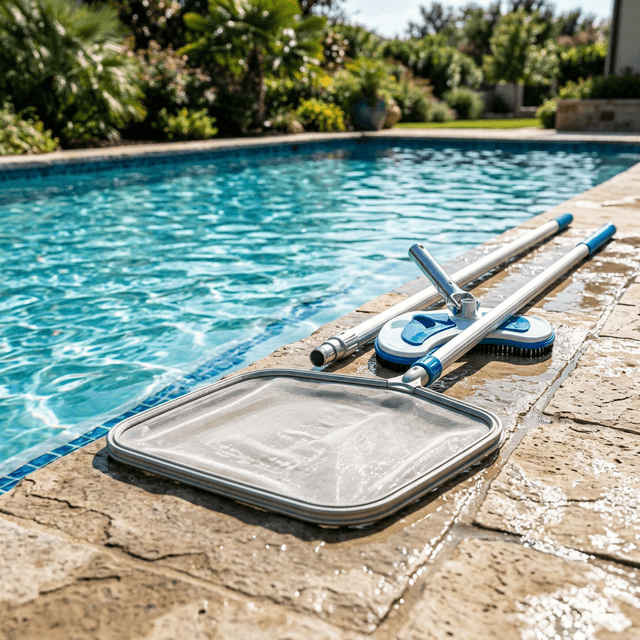
- Debris Removal: Using a heavy-duty leaf rake, John spent 90 minutes performing a blind scoop of the pool floor, removing over 40 pounds of submerged organic debris (leaves, branches, and acorns) that would constantly consume loose chlorine.
- The Chemical Strike:
- Initial test readings showed Free Chlorine at 0 ppm, pH at 8.2, and Cyanuric Acid (CYA) at a surprisingly manageable 40 ppm.
- John applied 4 gallons of 12.5% Liquid Sodium Hypochlorite directly to the deep end to spike the free chlorine levels above breakpoint oxidation.
- He adjusted the pH down to 7.2 using Muriatic Acid to maximize the killing power of the chlorine.
- The pump was set to run 24/7.
Day 2: The Cloudy Transition
Returning 24 hours later, the pool had shifted from dark green to a cloudy, milky blue. This is exactly what we want to see—it indicates the living algae spores have been killed, but the dead organic matter is now suspended in the water column.
- Chemistry Check: Free Chlorine had dropped back down to 2 ppm. The dead algae had consumed the initial payload. John re-shocked with an additional 2 gallons of liquid chlorine.
- Filter Maintenance: The new filter cartridges had already caught an immense amount of dead algae. John removed and deep-cleaned the cartridges, dropping the filter pressure from 28 PSI back to the baseline 16 PSI.
- Flocculation: To accelerate the clearing of the milky water, a clarifier was added to bind the microscopic dead algae particles together so the filter could trap them more efficiently.
Day 3: Crystal Clear Success
By the morning of the third day, the transformation was complete. The water was crystal clear, and the main drain at the bottom of the deep end was perfectly visible.
- Final Polish: John vacuumed the remaining dead algae dust from the floor of the pool using a heavy-duty commercial system. (For everyday maintenance after a recovery, we highly recommend investing in a high-quality Robotic Pool Vacuum to prevent sediment buildup).
- Chemical Balancing: The water chemistry was dialed into perfect maintenance levels:
- Free Chlorine: 4.0 ppm
- pH: 7.4
- Total Alkalinity: 100 ppm
- Calcium Hardness: 280 ppm
- Transition to Weekly Care: The homeowners were thrilled with the 72-hour turnaround and immediately signed up for our Premium Weekly Service plan to ensure the pool never returned to its native green state.
Why Experience Matters
Generic pool advice tells you to "just add shock." But without addressing the underlying mechanical failures, removing the organic debris floor load, and continually cleaning the filter during the die-off phase, a green pool can stay green for weeks.
If you are dealing with a severe algae bloom in the DFW area, don't waste money on guess-and-test chemicals. Learn more about our Guaranteed Green-to-Clean Recovery Service and call the experienced professionals at Simplified Pools.